Imagine walking into your home and instantly feeling calm, positive, and at peace. That is exactly what Vastu Shastra promises — and the good news is, you do not need to rebuild your house to experience it.
Vastu Shastra is an ancient Indian science of architecture and space arrangement. It is based on the idea that the energy flow within your home directly affects your health, relationships, wealth, and overall well-being. For centuries, Indian families have used Vastu principles to design their homes. Today, modern interior designers are finding smart ways to blend these time-tested guidelines with contemporary aesthetics.
Whether you are designing a new home or refreshing your existing one, here are practical and stylish Vastu-friendly interior design tips that actually work in modern homes.
1. Start With the Main Entrance — The Gateway of Energy
In Vastu, the main entrance of your home is considered the most important area. It is where positive energy (also called prana) enters your home. A well-designed entrance can set the right tone for the entire house.
What to do:
-
The main door should ideally face North, East, or North-East direction.
-
Keep the entrance well-lit, clean, and clutter-free at all times.
-
Use a solid, attractive wooden door — avoid broken or squeaky doors as they are said to block positive energy.
-
Place a nameplate at the entrance. A clean, visible nameplate invites clarity and identity into the home.
-
Add a small lamp or warm lighting near the door to attract positivity.
-
You can place auspicious symbols like a Swastika, Om, or fresh flowers near the entrance.
Modern touch: A beautifully designed wooden door with warm LED lighting and a minimalist nameplate can look stunning while following Vastu perfectly.
2. The Living Room — Where Energy Gathers
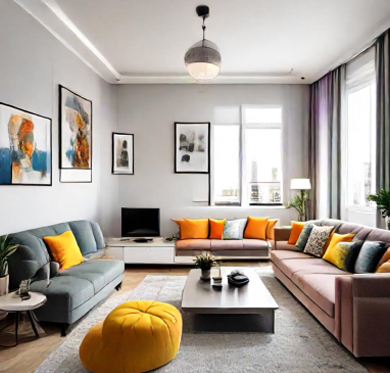
The living room is the heart of your home. It is where family members gather, guests are welcomed, and memories are made. Vastu says this space must promote free energy flow and positive interaction.
What to do:
-
The living room is best placed in the North, East, or North-East part of the home.
-
Furniture should be placed in the South or West direction, so family members naturally face North or East while seated — these directions are considered auspicious.
-
Avoid placing heavy furniture in the centre of the room. Keep the centre open and spacious.
-
Use light, soothing colours like cream, white, beige, light yellow, or light green.
-
Natural light should enter freely — keep windows on the North or East walls unblocked.
What to avoid:
-
Do not place mirrors directly opposite the main door.
-
Avoid keeping broken or non-functional items like a stopped clock or a cracked decorative piece.
Modern touch: A neutral colour palette with natural wood accents, open seating arrangements, and large windows on the East wall looks elegant and is fully Vastu-compliant.
3. The Bedroom — Your Space for Rest and Rejuvenation
Your bedroom directly impacts the quality of your sleep, relationships, and mental health. Vastu has very specific guidelines for bedroom placement and arrangement.
What to do:
-
The master bedroom should ideally be in the South-West corner of the house. This direction is associated with stability and strength.
-
While sleeping, your head should point towards the South or East. Sleeping with your head towards the North is discouraged as it is believed to disturb sleep quality.
-
Use warm, earthy colours like beige, soft brown, peach, or muted pink for bedroom walls. These promote relaxation and warmth.
-
The bed should be placed against a solid wall — not under a beam or window.
-
Keep the area under the bed clean and clutter-free.
What to avoid:
-
Do not place a mirror directly in front of the bed. Vastu says this can cause restlessness and disturb sleep.
-
Avoid placing the TV inside the bedroom if possible. If necessary, cover it when not in use.
-
Do not store negative items like old bills, broken jewellery, or unused electronics under the bed.
Modern touch: A platform bed against a South wall, warm lighting, earthy tones, and minimal decor create a serene, Vastu-friendly bedroom that looks straight out of a design magazine.
4. The Kitchen — The Source of Health and Nourishment
The kitchen represents fire and nourishment. According to Vastu, its position and design can influence the health and prosperity of the entire family.
What to do:
-
The kitchen should be located in the South-East corner of the home, which is the direction of Agni (fire).
-
The person cooking should face East while cooking. This is said to promote health and good energy.
-
Use bright, warm colours like orange, yellow, red, or off-white in the kitchen. These colours align with the fire element.
-
Keep the kitchen well-ventilated and well-lit. A bright kitchen promotes positive energy.
-
Store grains, pulses, and food items in the South-West direction for abundance.
What to avoid:
-
The kitchen should never be directly opposite the toilet or bathroom.
-
Avoid placing the cooking stove directly under a window or in the North-East corner.
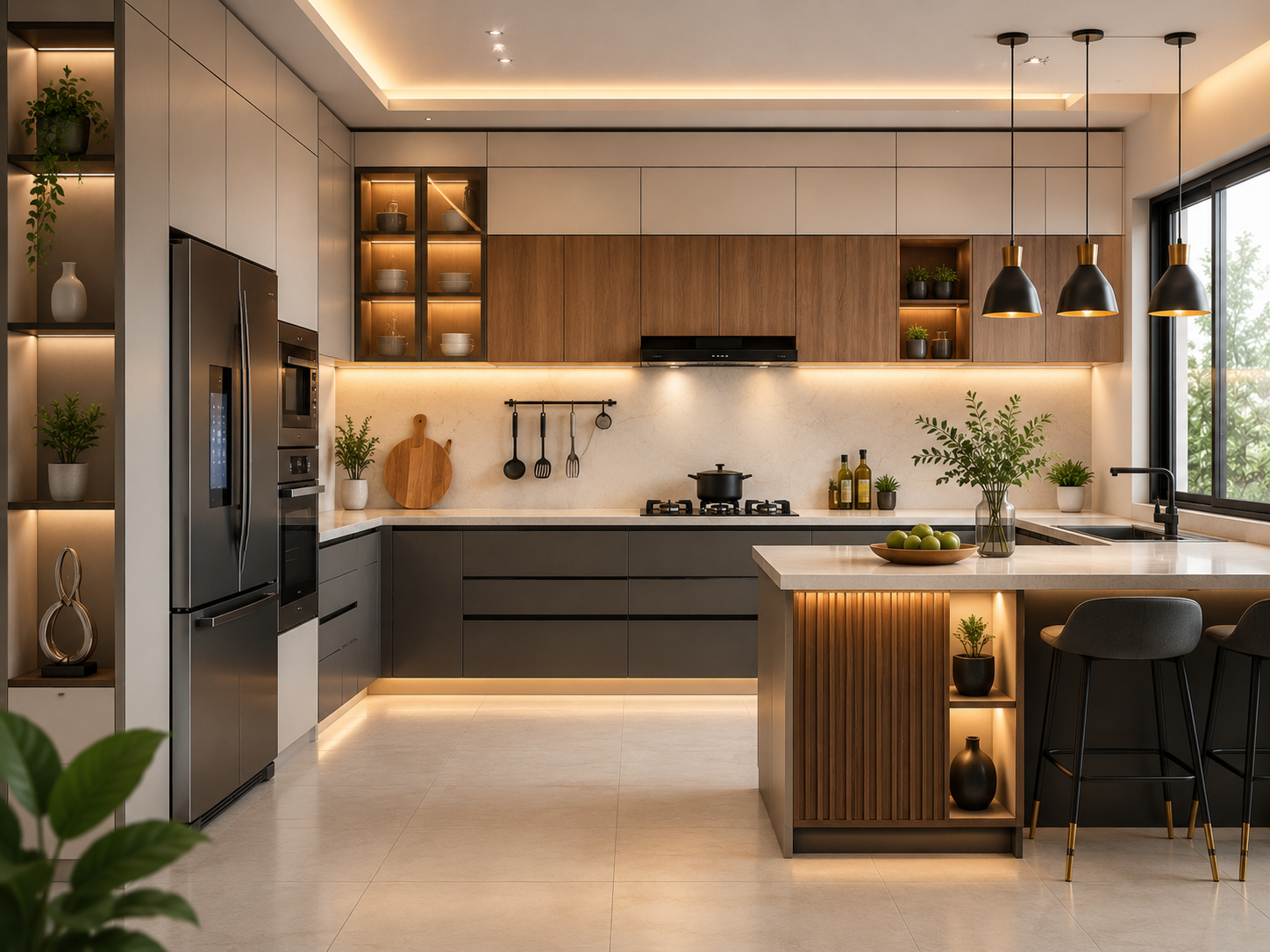
Modern touch: A modular kitchen in warm white with yellow or terracotta accents, East-facing cooking position, and open shelving for organised storage looks modern, functional, and Vastu-aligned.
5. The Pooja Room — The Centre of Positivity
A pooja room or prayer space is considered the most sacred corner of any Indian home. Even in compact modern apartments, a dedicated spiritual corner can make a big difference.
What to do:
-
The ideal direction for a pooja room is the North-East corner of the home. This direction is governed by positive cosmic energy.
-
Place idols and pictures of deities facing West so that the person praying faces East.
-
Keep the pooja space clean, well-lit, and fragrant. Use incense sticks, diyas, or fresh flowers.
-
Use white, yellow, or cream colours for the pooja room walls.
-
Idols should not be too large — keeping them in proportion to the space is important.
Modern touch: A beautifully carved wooden temple unit or a floating marble shelf with warm recessed lighting creates a spiritual yet modern prayer space — even in a small apartment.
6. Colours and Their Vastu Significance
Colours play a massive role in interior design, and Vastu has a clear take on this. Each direction is governed by a specific element, and each element corresponds to certain colours.
|
Direction |
Recommended Colour |
|
North |
Green, Blue |
|
South |
Red, Orange |
|
East |
White, Light Blue |
|
West |
Grey, White |
|
North-East |
Light Yellow, White |
|
South-West |
Brown, Earthy tones |
|
North-West |
White, Light Grey |
|
South-East |
Orange, Pink, Red |
General tips:
-
Avoid using dark, heavy colours like deep red, black, or dark grey on all four walls of any room.
-
White and off-white are universally safe and Vastu-friendly choices.
-
Use bold colours as accents — on a single feature wall, in furnishings, or through decor accessories.
7. Lighting — Brighten Your Home the Vastu Way
Vastu Shastra emphasises natural light as a primary source of positive energy. A well-lit home is a happy home.
What to do:
-
Maximise natural light from the North and East directions.
-
Use warm, soft lighting in bedrooms and cooler, brighter lighting in the kitchen and study.
-
The living room and common areas should be well-lit at all times, especially in the evenings.
-
Place a bright lamp or light in the South-East corner of each room to activate the fire element.
What to avoid:
-
Avoid dim or flickering lights anywhere in the home — they represent stagnant energy.
-
Do not keep the entrance dark or poorly lit.
8. Plants and Nature — Bringing Life Into Your Home
Indoor plants are a beautiful way to add life and freshness to your interior. Vastu welcomes the right kind of plants.
Vastu-approved plants:
-
Tulsi (Holy Basil) — Best placed in the North, East, or North-East.
-
Money Plant — Keep it in the South-East direction for prosperity.
-
Bamboo Plant — Symbolises growth and good luck.
-
Peace Lily — Great for purifying the air and maintaining calm.
What to avoid:
-
Avoid keeping cactus or thorny plants inside the home as they are believed to create conflict.
-
Do not keep dried or artificial flowers as they represent stagnant energy.
-
Avoid large trees directly in front of the main entrance.
9. Clutter — The Biggest Vastu Problem
This is perhaps the most practical Vastu tip of all — declutter your home regularly. Clutter blocks the natural flow of energy and creates mental stress, confusion, and financial blocks.
Simple decluttering habits:
-
Clear out unused items from every room every few months.
-
Organise storage spaces neatly — cupboards, kitchen shelves, and bathroom cabinets.
-
Dispose of broken items, expired products, and things you no longer use.
-
Keep the North-East corner of every room clean and open — it is the direction of positive energy flow.
Modern touch: Minimalist interiors, concealed storage solutions, and clean surfaces are both a design trend and a Vastu best practice. They look good and feel good.
10. Mirrors — Use Them Wisely
Mirrors are powerful tools in interior design. They add space, light, and style. But Vastu has some important guidelines around their placement.
What to do:
-
Place mirrors on the North or East walls for the best effect.
-
Mirrors in the living room can amplify positive energy when placed correctly.
-
A mirror in the locker or safe area is said to double wealth energy.
What to avoid:
-
Never place a mirror directly opposite the main entrance — it reflects positive energy back out.
-
Avoid mirrors directly in front of the bed.
-
Do not keep cracked or distorted mirrors anywhere in the home.
Conclusion
Vastu Shastra is not about rigid superstition — it is about creating a home that supports your well-being, happiness, and growth. When combined with modern interior design, Vastu principles can help you build a space that is not only beautiful but also deeply harmonious.
The best part? Most of these tips are simple, practical, and budget-friendly. You do not need to make structural changes. Small adjustments in room arrangement, colour choices, lighting, and decluttering can bring a noticeable positive shift in how your home feels.
Start with one room, one corner, one change — and experience the difference for yourself.
Looking to redesign your home with Vastu-friendly interiors? Connect with our expert interior designers for a personalised consultation.